
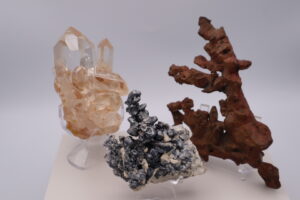
Special Exhibit
Opens October 19th

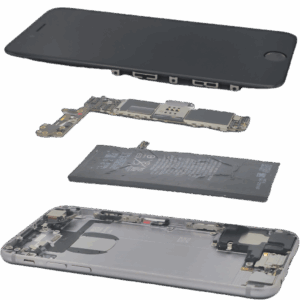
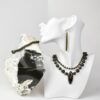
Your cellphone is a treasure chest containing over 65 minerals!
These minerals play a variety of vital roles – often within the same device.
Formed by the earth, then discovered by miners and processed by hundreds of hands, minerals make your phone possible.
This special exhibit opens up our phones
to reveal the hidden gems in your pocket!
Regular Museum Admission | Regular Museum Hours
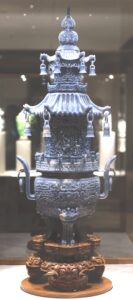
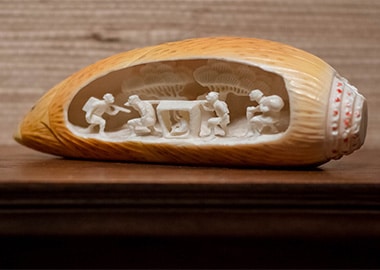
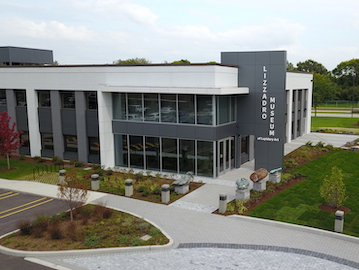
Upon entering the Lizzadro Museum, one is overcome with the magnificence of jade. It is easy to see that Joseph Lizzadro Sr. had an eye for well-crafted, beautiful jade carvings. The Lizzadro Collection is one of the most impressive jade collections in the United States. But what is jade?
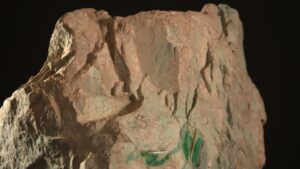
Jade is a trade term for two different minerals: nephrite – a calcium, magnesium/iron amphibole and jadeite – a sodium, aluminum pyroxene. Both minerals are called jade but differ in appearance and value. Nephrite can come in a multitude of colors, and varieties from around the world each have distinct colorations. Top-quality “mutton fat” jade, a milky white, translucent form of nephrite, comes from Hetian (Hotan) in the Xinjiang Province of China. British Columbia nephrite is often the dark green coloration associated with “jade. Jadeite also comes in a wide range of colors: lavenders, greens, yellows, even blues on occasion, as seen with the Incense Burner that greets visitors as they enter the exhibit hall. Jadeite is harder than nephrite and typically more valuable. “Imperial Jade” is rich green jadeite.
Almost everywhere they occur, nephrite and jadeite have been prized by indigenous cultures for their combined strength, durability, and beauty. Nephrite and jadeite have been used by Chinese and Meso-American cultures for thousands of years. Neolithic Europeans used both nephrite and jadeite tools but stopped after the start of the Bronze Age. While all green stones were classified as “emeralds,” 16th Century Spaniards adopted the Aztec belief that jadeite relieved kidney issue. The Spaniards referred to jadeite as “piedras de yjada,” “stones of the sides.” This was eventually shortened to “Yjada” or “jade” in English and other European languages.
The Chinese word “yu” signified any hard, green material. In China, most traditions centered around nephrite, until a new find of Burmese (now Myanmar) jadeite was discovered in the 18th century. Emperor Qianlong, who reigned from 1736-1795, expanded China’s control into Burma. The source of this new, emerald-green jadeite became a fascination to both the emperor and the people of China. At the time, the Chinese distinguished these two materials; “yu” was nephrite and “fei-ts’ui” was Burmese jadeite. European traders never distinguished between the two stones and used the term “jade” for both materials. In 1863, French mineralogist Alexis Damour recognized that the two materials were mineralogically different and gave them separate names. However, the term “jade” had become entrenched in the gem trade.
To learn more about these fascinating gemstones, join us for our inaugural “Rock to Gem” series on Saturday March 21st at 2 p.m.
Register here
References
- Hughes, R.W., et al. “Burmese Jade: The Inscrutable Gem.” Gems & Gemology vol. 36, no. 1, 1 April 2000 pp. 2–25. https://doi.org/10.5741/gems.36.1.2.
- Arem, Joel E., “Jadeite Value, Price, and Jewelry Information.” International Gem Society, 27 September 2022. https://doi.org/10.5741/gems.36.1.2.
- Wang, Mingying, and Guanghi Shi. “The Evolution of Chinese Jade Carving Craftmanship.” Gems & Gemology vol. 56, no. 1 1 May 2020 pp. 30–53. https://doi.org/10.5741/gems.56.1.30.

Field Trip Assistance Grant
still taking applications!
Applications for the Field Trip Assistance Grant are
now available online here.
This program will provide transportation and tour costs
to eligible students in the Chicagoland area.
Funds are still available for the 2025-2026 school year.
Interested teachers and school districts should reach out to our Educator, Sara Kurth.



DuPage Foundation Grant to support Community Music Programs.
The Lizzadro Museum received a grant to continue running the Community Music Programs through Fall 2026. Local musicians will continue to bring music to our collection.
Upcoming Programs:
Sunday January 11: New Vintage Strings – A Century of Songs (Register here)
Sunday February 1: Downtown Charlie Brown (Register here)
Sunday March 22: David Polk Project (Register here)