- 1717.October
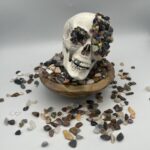
Spooky Yet Sparkly Geodes
https://lizzadromuseum.org/event/geode-skulls-2026/Lizzadro Museum of Lapidary Art1220 Kensington Road, Oak Brook, IL 60523Geodes are one of the most fascinating phenomena in the gem world and now you can create your very own Halloween-inspired version! In this hands-on workshop, you’ll transform a plastic skull into a one-of-a-kind crystal geode. Whether you love rocks and minerals, getting crafty, or just want to add a bit of sparkle to your Halloween decorations, this workshop is a perfect way to celebrate the season! Each participant will design and create their very own plastic skull, complete with tiny crystals! All materials included.
Workshops – 1:00 to 3:oo p.m.
Teens and Adults – Children 8-12 must partner with adult
FEE: $20 per person – $15 Museum Members
Limited Capacity – Reservations Required – Sign up here - 1818.October

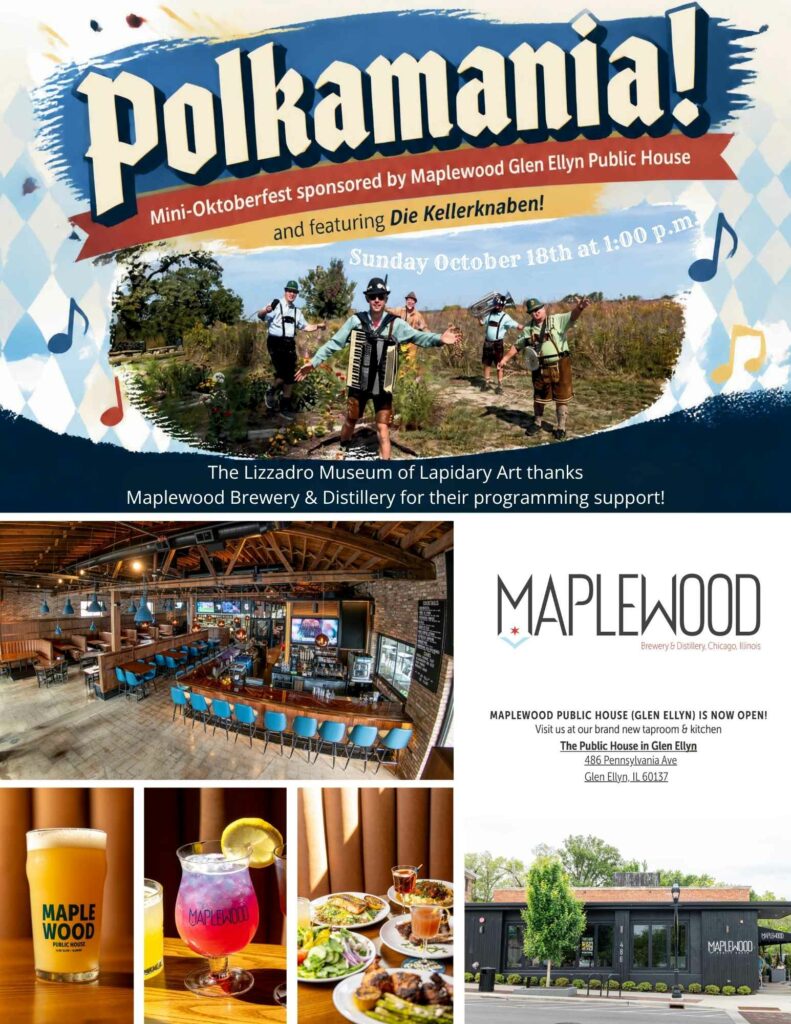
CMP: Polkamania
https://lizzadromuseum.org/event/polkamania/Lizzadro Museum of Lapidary Art1220 Kensington Road, Oak Brook, IL 60523The folk music and dances that took the world by storm! Enjoy a mini-Oktoberfest party before the performance on our outdoor patio with beer, brats, and pretzels. Then join us inside and sing-along with Die Kellerknaben. The live ensemble will teach about the instruments, styles, and history of the polka as you listen to songs from around the world.
Patio Mini-Oktoberfest – 1:00 p.m. – Check-in requiredPerformance – 2:00 p.m. – 60 minutes
All Ages Welcome
Fee: $25 per Person
Museum Members $10Reservations Required
Sign up here
Special Exhibit
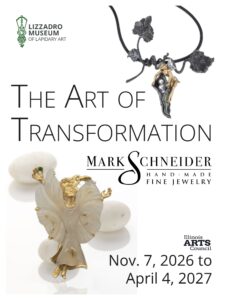
The Art of Transformation:
The Jewelry of Mark Schneider
From November 7, 2026 through April 2027
This exhibition brings together 40 pieces of jewelry by the award-winning jeweler Mark Schneider, offering a glimpse into the artist’s imaginative and distinctive approach to the craft. Featuring one-of-a-kind pieces and an array of exceptional gemstones, the collection is organized around the themes and ideas that have inspired Schneider throughout his career. Together, the pieces showcase the remarkable range, moving effortlessly from the beautifully refined to the whimsical.
Regular Museum Admission | Regular Museum Hours
The Art of Transformation: The Jewelry of Mark Schneider
By Elyse Zorn Karlin, Guest Curator
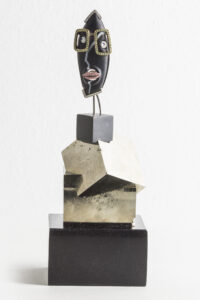
A selection of Mark Schneider’s one-of-a-kind jewelry is on display at the Lizzadro Museum from November 7, 2026 through April 4, 2027. Mark has won 68 prestigious jewelry industry awards since he began his career as a jewelry designer.
Segueing from his family’s jewelry business which he had been a part of for a number of years, he began to work with a range of precious and semi-precious stones that “speak” to him and allow him to create exciting jewelry.
Many jewelers design a piece of jewelry first and then search for the stones to mount into their design. Mark works in a completely different way—he finds stones he thinks are beautiful or interesting, and sometimes rare, and designs a piece of jewelry around the stones. He works with gem cutters and lapidaries who often use unusual faceting techniques. Mark’s designs compliment the stones as a frame does a painting.
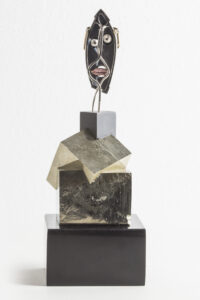
Mark’s jewelry reflects many of his interests. It primarily fits into several categories: water, flora and fauna, architectonic, furniture-influenced, and the cosmos and they are grouped in this manner in the exhibition.
In addition to the award-winning pieces there are an additional 22 pieces of jewelry he designed for the American Jewelry Design Council Projects, the prestigious invitation-only group of which he is a member. The AJDC selects a theme each year and the members are free to interpret the theme in their own way. Mark’s pieces for the AJDC show his playful nature which is a different side of his work.
“The Art of Transformation: The Jewelry of Mark Schneider” opens on Saturday November 7, 2026. Join us at 2 p.m. to meet the artist and learn about the inspiration for his jewelry designs. Register here. His full-length film, “Sharing the Rough” will play on Sunday November 8 and December 13 at 1 p.m. This documentary is an eye-opening journey into the world of gemstones. Register here.